7 Supplements I Started Taking After My Narcissist Breakup That Actually Helped Me Heal
Getting out of a relationship with a narcissist doesn't mean the pain stops the moment you walk out the door. If anything, the weeks and months after a narcissistic breakup can feel like the most disorienting, exhausting, and emotionally raw period of your life. The trauma bond, the constant anxiety, the sleepless nights replaying every gaslighting conversation — it all takes a very real, measurable toll on your body and your nervous system.
I'm not going to pretend I had it all figured out. I didn't. But in the middle of the fog, I started doing my research and slowly built a supplement routine that genuinely supported my mental health recovery. These are the 7 supplements that helped me get through the hardest season of my life — and there's solid science behind why they work, especially after emotional trauma and chronic stress.
Note: This post is based on my personal experience and research. Always consult a healthcare professional before starting any new supplement protocol.
💡 If you're still in the thick of it, you might also find these posts helpful:
👉 8 Books That Helped Me Overcome Narcissistic Abuse
👉 9 Evening Routine Habits That Helped Me Heal
👉 11 Small Habits That Helped Me Finally Move On
1. Magnesium Glycinate — The One That Changed My Sleep Overnight
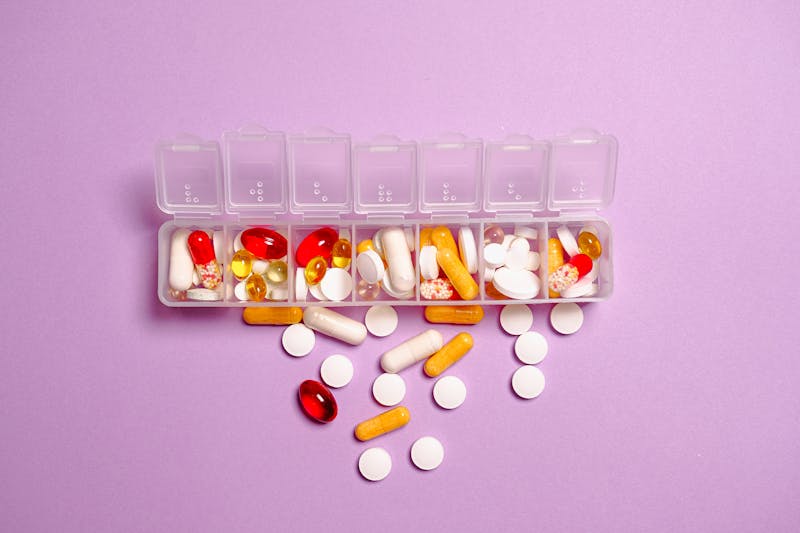
Photo by Polina Tankilevitch | Pexels
If there's one supplement that I would tell every single person coming out of a toxic relationship to try immediately, it's magnesium glycinate. After months of hypervigilance, cortisol flooding, and barely sleeping, my nervous system was completely depleted — and magnesium was one of the first things I reached for.
Here's why this form matters: magnesium glycinate is a highly absorbable form known for its calming effects and may help reduce anxiety and promote relaxation, making it a popular choice for improving sleep quality. Unlike magnesium citrate, which can cause digestive issues, glycinate is gentler on the stomach and specifically paired with glycine — an amino acid that naturally promotes relaxation and improves sleep quality.
The science backs this up too. A systematic review found that magnesium supplementation reduced sleep onset latency by over 17 minutes and extended total sleep time, compared to placebo. And when you're recovering from narcissistic abuse, sleep is literally medicine.
Magnesium is necessary to produce serotonin, a key neurotransmitter that affects mental health and mood, and it also promotes healthy function of dopamine and norepinephrine — the same brain chemicals targeted by many psychiatric medications. Chronic stress depletes magnesium, which means that after a traumatic relationship, your levels are likely already low.
I personally take 300–400 mg about an hour before bed. Within a few days I noticed I was falling asleep faster and waking up less in a panic at 3 AM — which had become my nightly ritual during the worst of it.
🛒 What I recommend: Pure Encapsulations Magnesium Glycinate – 90 Capsules — this is pharmaceutical grade, allergen-free, and one of the most trusted brands out there.
2. Ashwagandha — Taming the Cortisol Monster

Photo by Nataliya Vaitkevich | Pexels
One of the most misunderstood parts of recovering from a relationship with a narcissist is that your body is physically stuck in survival mode. When you've been walking on eggshells for months or years, your adrenal system is overworked and your cortisol levels are chronically elevated. This isn't a metaphor — it's a measurable physiological reality.
That's exactly where ashwagandha comes in. Classified as an adaptogen — an herb that helps the body resist and adapt to stressors — ashwagandha has been used in Ayurvedic medicine for over 5,000 years. But it's the modern clinical research that really sold me.
A meta-analysis of 15 studies found that ashwagandha supplementation significantly reduced anxiety, stress, and cortisol levels compared to placebo at 8 weeks of treatment. Another 60-day randomized, double-blind placebo-controlled study found that ashwagandha was associated with greater reductions in morning cortisol and statistically significant reductions in anxiety scores.
Ashwagandha works by modulating activity of neurotransmitters like serotonin, GABA, and norepinephrine, and has been shown to reduce cortisol secretion levels by 11–32.6%. For someone whose nervous system has been hijacked by chronic relationship stress, that's significant. It also helped improve my sleep quality and my ability to focus — both of which are casualties of narcissistic abuse recovery.
I noticed a real difference within about 2–3 weeks of consistent use, mostly in how I responded to small stressors. Things that used to send me into a spiral started feeling more manageable. Recommended doses range from 250 to 600 mg daily, and quality matters — look for standardized extract with withanolides.
🛒 What I recommend: Integrative Therapeutics Cortisol Manager with Ashwagandha + L-Theanine — voted best overall ashwagandha supplement and combines two of the most powerful calming ingredients together.
3. Omega-3 Fish Oil — Rebuilding My Brain After Trauma

Photo by Artem Podrez | Pexels
The emotional wreckage of a narcissistic relationship doesn't just hurt — it quite literally rewires your brain. The chronic stress, gaslighting, and emotional manipulation create patterns of dysregulation that affect your brain chemistry at a cellular level. I didn't fully understand this until I started researching omega-3 fatty acids and mood disorders.
EPA and DHA — the two primary omega-3s found in fish oil — are critical building blocks of brain cell membranes and have powerful anti-inflammatory functions throughout the body. They also support mood regulation and neurotransmitter activity, including the dopaminergic and serotonergic pathways. Research has established that low omega-3 levels are associated with higher rates of depression and anxiety, and that supplementation can help reduce these symptoms.
A clinical research review found that omega-3 fatty acids can help reduce stress and improve emotional balance, with people who struggle with depression showing the most benefit from EPA-dominant formulas. The anti-inflammatory effect is particularly important here — depression has been strongly linked to chronic inflammation, and the kind of chronic emotional stress that comes from narcissistic relationships is highly inflammatory at a biological level.
For people dealing with mood disorders or trauma recovery, most experts recommend taking 1,000–2,000 mg of EPA+DHA daily, with a preference for higher EPA content when targeting mood specifically. I noticed gradual but real improvements in emotional stability and mental clarity over the first 4–6 weeks.
🛒 What I recommend: High-potency Omega-3 Fish Oil (1600mg EPA+DHA) on Amazon — look for molecularly distilled, third-party tested options for purity.
4. Vitamin D3 — The Sunshine Supplement My Mood Desperately Needed

Photo by Andrea Piacquadio | Pexels
When I was in the darkest period of my recovery from a narcissistic relationship, I barely left the house. I wasn't eating well, I wasn't going outside, and I felt this bone-deep heaviness that I couldn't shake no matter what I did. When I finally got bloodwork done, my vitamin D levels were critically low.
This is extremely common. Vitamin D deficiency has been consistently linked to higher rates of anxiety and depression, particularly in regions with limited sunlight exposure. Research shows that people with higher levels of vitamin D tend to feel less depressed, and that vitamin D helps improve mood and reduce symptoms of depression by lowering inflammatory substances in the body.
Vitamin D modulates neurotransmitter activity, reduces neuroinflammation, and influences neuroplasticity, enhancing cognitive function and mood regulation. It supports serotonin production and brain function — two critical mechanisms in emotional resilience. The form that matters is D3 (cholecalciferol), which is significantly more effective at raising blood levels than D2. Typical therapeutic doses range from 2,000 to 5,000 IU daily, depending on your baseline levels.
A study also found that low vitamin D levels were associated with a 75 percent increased risk of depression. That number hit hard when I read it. Within about 6–8 weeks of supplementing, I noticed a real, measurable shift in my baseline mood. The heaviness didn't disappear overnight, but it started to lift in a way that nothing else had managed.
Pair D3 with K2 for better absorption and cardiovascular benefits — most high-quality D3 supplements now come combined with K2.
🛒 What I recommend: Vitamin D3 + K2 5,000 IU on Amazon — look for softgel form with olive oil base for optimal absorption.
5. L-Theanine — My Natural Anxiety Switch-Off
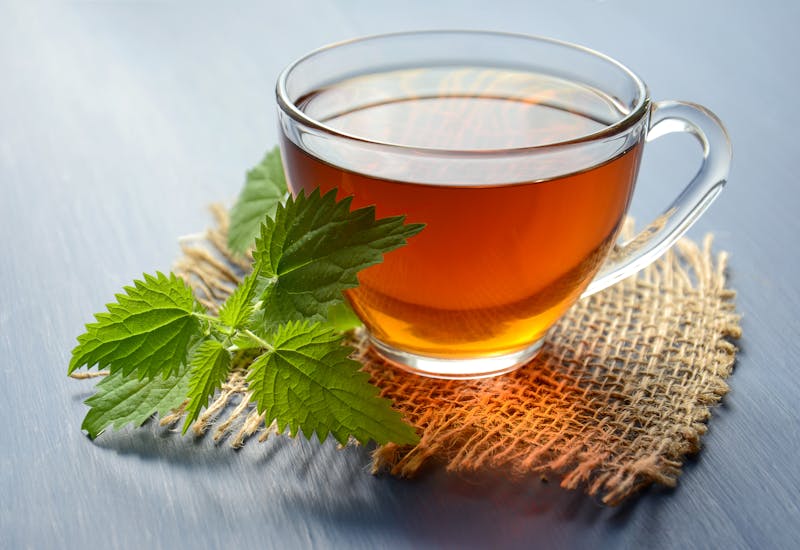
Photo by rawpixel.com | Pexels
One of the most insidious side effects of leaving a narcissist is the constant, free-floating anxiety that seems to have no off switch. Even when nothing is actively wrong, your nervous system stays on high alert. The hypervigilance doesn't just evaporate — it lingers, sometimes for months. That's where L-theanine became my secret weapon.
L-theanine is an amino acid found naturally in green tea that promotes calm concentration by increasing alpha brain waves — the same mental state achieved through meditation. It works without sedation, which means you can take it during the day and still function clearly. It's one of the few supplements that creates a genuinely noticeable effect within 30–60 minutes of taking it.
A small study found that people with mild depression who took 250 mg/day of L-theanine for 8 weeks reported less stress, better sleep, and improved mood. Another small RCT showed that L-theanine at 200 mg/day in combination with existing treatment decreased major depression disorder recurrence. The combination of ashwagandha and L-theanine (which I mentioned in the supplement above) is particularly powerful for people dealing with post-narcissistic anxiety.
I typically take 100–200 mg in the morning when I feel the anxious edge creeping in, and another 200 mg in the early evening if needed. Unlike many anxiolytics, L-theanine doesn't create dependency or cognitive fog. It just takes the sharp, jagged edge off the anxiety and lets me actually think straight.
🛒 What I recommend: L-Theanine 200mg Supplements on Amazon — look for Suntheanine® branded L-theanine, which is the form used in most clinical studies.
6. B-Complex Vitamins — Feeding My Exhausted Nervous System

Photo by Miguel Á. Padriñán | Pexels
There's a reason therapists often ask about nutrition when treating anxiety and depression — and B vitamins are one of the most critical pieces of that puzzle. After a prolonged period of chronic emotional stress like narcissistic abuse, your B vitamin stores take a serious hit. The result: fatigue, brain fog, emotional volatility, and a nervous system that just can't recover.
B vitamins are essential for maintaining a healthy nervous system and aiding neurotransmitter synthesis. Specific B vitamins stand out for their brain-boosting properties — B6 helps convert tryptophan into serotonin (the mood-regulation neurotransmitter), while B12 and folate (B9) are vital for nerve health and cognitive function.
A 2017 study found that participants who had lower blood levels of vitamin B12 were more likely to have depression or anxiety. A 2019 study reported that a supplement containing B vitamins, vitamin C, calcium, magnesium, and zinc significantly decreased anxiety in young adults. These are not marginal effects — they're clinically meaningful.
For me, taking a B-complex daily was like giving my nervous system actual fuel. The fog started to lift. The emotional crashes became less dramatic. I had more resilience to face the hard days that inevitably come with healing. B vitamins are water-soluble, which means your body doesn't store them well — chronic stress literally burns through them faster than you can replenish from food alone.
A well-rounded B-complex supplement can help ensure adequate levels, supporting emotional balance and overall mental well-being. Look for methylated forms (methylcobalamin for B12, methylfolate for B9) which are more bioavailable, especially if you have an MTHFR gene variant.
🛒 What I recommend: Methylated B-Complex Supplements on Amazon — the methylated versions are especially helpful for people struggling with mood and energy.
7. Probiotics — Healing the Gut-Brain Connection

Photo by Polina Tankilevitch | Pexels
This one surprised me the most, and I almost didn't include it — until I started really understanding the science. The gut-brain axis is not a metaphor. It's a real, bidirectional communication network between your digestive system and your brain, and it plays a profound role in mood, anxiety, and emotional regulation.
When your gut microbiome is balanced, it communicates effectively with the nervous system, produces calming neurotransmitters like serotonin and GABA, and reduces inflammation that can heighten stress responses. But chronic emotional stress — exactly the kind that comes from a long-term relationship with a narcissist — disrupts the gut microbiome significantly. Poor diet during a crisis (hello, not eating, or stress-eating junk food) makes it worse.
Research shows that many probiotic strains reduce depression and anxiety symptoms. A 2024 review found that probiotic supplementation was linked with lower cortisol levels and improved mood regulation in adults experiencing stress. A 2025 meta-analysis concluded that specific strains — especially Lactobacillus rhamnosus and Bifidobacterium longum — can positively affect mood and anxiety scores in people under chronic stress.
The concept of psychobiotics (probiotics that specifically affect mood and mental health) is one of the most exciting emerging areas in nutritional psychiatry. Probiotics can lower proinflammatory cytokines and oxidative stress and alleviate symptoms of depression and anxiety. During my recovery, I noticed that as my gut health improved, my emotional stability improved alongside it. Less bloating, better digestion — and genuinely calmer days.
Look for a multi-strain formula with at least 10 billion CFU, including strains from both the Lactobacillus and Bifidobacterium families.
🛒 What I recommend: High-Potency Probiotics (50 Billion CFU) on Amazon — choose one with multiple strains and delayed-release capsules for gut survival.
Final Thoughts: Supplements Are Support, Not a Solution
I want to be clear about something important: these supplements did not heal my trauma. Therapy, no-contact, journaling, and rebuilding my identity from scratch did that. But what these supplements did was create a physiological foundation that made healing possible — they stopped my nervous system from working against me at every turn.
When you leave a narcissist, your brain and body are operating from a deficit. Chronic stress depletes minerals, disrupts neurotransmitters, inflames your system, and wrecks your gut. Targeted supplementation is one of the most practical, evidence-backed ways to start restoring that balance while you do the deeper emotional work.
Start with one or two. Track how you feel. Give each supplement at least 4–8 weeks before judging its effect. And always loop in a healthcare professional, especially if you're on any medications.
You've survived one of the hardest things a person can go through. Your body deserves the same care you're giving your heart. 💛
📚 Recommended Resources
These books and products helped me go deeper into my healing journey and understanding of what narcissistic trauma does to the body and mind. Highly recommend all of them:
- 📖 "Healing from Hidden Abuse" by Shannon Thomas — One of the most validating books I've ever read about recovering from psychological abuse. Walks you through the six stages of healing.
- 📖 "The Body Keeps the Score" by Bessel van der Kolk — Essential reading for understanding why trauma lives in the body — and why supplements that address inflammation, nervous system regulation, and gut health actually matter in trauma recovery.
- 🛒 Trauma Recovery Supplement Stack on Amazon — Search for magnesium glycinate + ashwagandha + omega-3 + vitamin D3 to build out your foundational healing stack.
Affiliate Disclosure: This post contains Amazon affiliate links. If you purchase through these links, I may earn a small commission at no extra cost to you. I only recommend products I personally use or believe in. Thank you for supporting this blog! 💛


